Studio Philosophy
Founded on the principle that drapery is fundamentally building science, Jelly Tornado Zind addresses window coverings through thermal boundary thermodynamics, acoustic dampening, and solar reflectance.
Rejecting Transient Surface Trends
The contemporary interior furnishings industry treats window curtains as disposable seasonal fashion. Thin, unlined synthetics are marketed on transient color palettes with negligible regard for solar degradation, convective air currents, or acoustic speech clarity.
At Jelly Tornado Zind, our studio measures U-values, NRC coefficients, and solar heat gain coefficients (SHGC). We view every window opening as an architectural void that demands engineered insulation and light calibration tailored to room use.
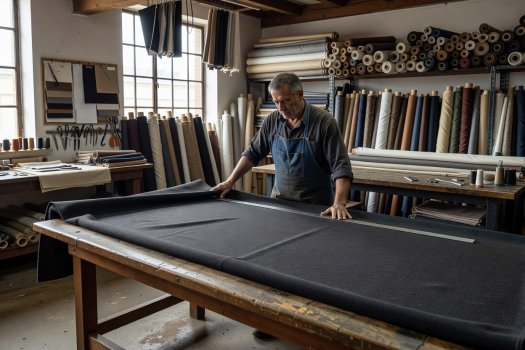
Our Core Engineering Tenets
1. Thermal Boundary Defense
Every exterior window opening is an active heat leak. Unlined fabrics merely conceal the problem. We engineer multi-layer composite assemblies that cut radiant cold transmission by up to 35%.
2. Calibrated Acoustic Mass
Modern architecture embraces hard, resonant materials: polished concrete, floor-to-ceiling glass, and minimalist steel. We introduce calculated textile mass to restore acoustic warmth and speech intelligibility.
3. Structural Hardware Permanence
Curtains should function smoothly for decades, not months. We mandate industrial-grade extruded aluminum tracks, heavy-duty ball-bearing wheeled carriers, and structural lintel anchors that never sag.
The Studio Team & Standards
Our advisory collective comprises architectural fabricators, textile physics researchers, and certified structural installation engineers. Operating from our central London facility, we advise architects, interior contractors, and residential clients across the United Kingdom and global markets.
All calculations provided on our platform adhere to British Architectural Drapery Standards (BS 5867-2 for flammability, ISO 354 for acoustic absorption, and EN 14501 for solar and light protection properties).